Tuesday in September 2018: The Order That Looked Too Good to Question
I'm a sourcing coordinator at a mid-size OEM apparel manufacturer. I've handled fabric orders for eight years, and I've made plenty of mistakes. The one I still use in training happened in September 2018. It cost us roughly $4,800 and almost killed a swimwear private label project for a client in the outdoor swimming market.
The client wanted 500 swim parkas, 400 thermal swim tops, and 800 pairs of swim bottoms. The bottoms were straightforward: standard swimwear fabric private label, custom color, small logo print, normal lycra content. We do that in our sleep.
The shell fabric was not that easy. It called for a breathable nylon outer fabric with a thermal insulation layer inside. I searched for 'nylon fabric wholesale,' found a broker with a suspiciously good price, and placed a combined order. Without a physical swatch. I know. I still wince thinking about it.
The Real Mistake Was the Word 'Thermolite Fabric'
The technical pack said: 'THERMOLITE insulation, 80gsm.' I read that as 'thermolite fabric' and asked the broker if they could supply the whole package—shell and insulation in one layer. The broker said yes. I didn't ask how.
That's the exact moment I lost the money.
When you search on a wholesale platform for the phrase 'thermolite fabric,' you'll see a hundred different listings. Some are genuine THERMOLITE insulation batting. Some are THERMOLITE-branded knit fabrics for base layers. Some are cheap polyester with the word 'thermal' misspelled. They are not the same thing.
THERMOLITE is a registered trademark of The Lycra Company, not a specific weave or construction. It can be a fiberfill, a knit fabric, or a blend. The trademark means the fiber was made by a licensed manufacturer to a defined performance standard. It does not mean the material is suitable as an outer shell.
The nylon fabric wholesale order was the bigger payment: 2,300 yards of 70D ripstop with a DWR finish. The broker's tech sheet said 'breathable nylon fabric' and 'water repellent.' It did not give an MVTR number. It did not give a hydrostatic head number. I didn't ask. I sent the PO, paid the deposit, and waited six weeks.
The Fabric That Looked Fine and Wasn't
The nylon shell arrived in a single wrapped bale. On the face it looked fine. Fine enough that our pattern maker almost cut it. Then I unfolded a corner and ran my hand across the reverse side.
It was coated.
A shiny, continuous PU coating was laminated to the back of every yard. Our seamstress looked at it and said, 'This is for a rain jacket, not a swim parka.' She was right. The sample test showed about 5,000 mm water column, which sounds great if you're standing in a drizzle. But moisture vapor transmission was basically nil. For a swimmer who is already wet, a non-breathable parka turns into a condensation bag. The wearer ends up colder, not warmer.
The so-called THERMOLITE insulation arrived in a separate carton. The label said 'Thermal batting 80gsm.' No THERMOLITE brand mark. No license number. No test report. I couldn't prove it was counterfeit, but I couldn't prove it was genuine either. Our client's compliance contract required documented authenticity. That carton didn't have it.
Total Cost of That Tuesday
- Rejected 2,300 yards of PU-coated nylon: roughly $2,750 plus freight
- Unbranded thermal batting that couldn't be legally called THERMOLITE: $640
- Expedited replacement samples from a certified distributor: $180
- Hours of my time plus the pattern maker's time re-testing: about $900
- One very uncomfortable phone call with the brand owner: priceless
I want to say the exact total was $4,800, but I might be misremembering the split. The point isn't the exact number. The point is that a $2,000 discount on the original order became a $4,800 lesson.
What Our Breathable Fabric Distributor Buying Guide Looks Like Now
After that disaster, I built what my team now calls the breathable fabric distributor buying guide. It started as an email checklist. It's still not a public document, but the core rules apply to any B2B buyer sourcing functional fabrics.
- Separate the shell from the insulation. If the spec says THERMOLITE insulation, order THERMOLITE insulation. If it says a breathable nylon shell, order a breathable nylon shell. Do not let a broker blend them into a mystery package.
- Ask for the brand evidence. Genuine THERMOLITE insulation comes from licensed manufacturers. Ask for a certificate or a mill trace. If the supplier hesitates, walk away.
- Demand a test report with a date. For breathable fabrics, ask for MVTR, hydrostatic head, air permeability, and the test method. The report should be from a recognized lab, not a screenshot on a product page.
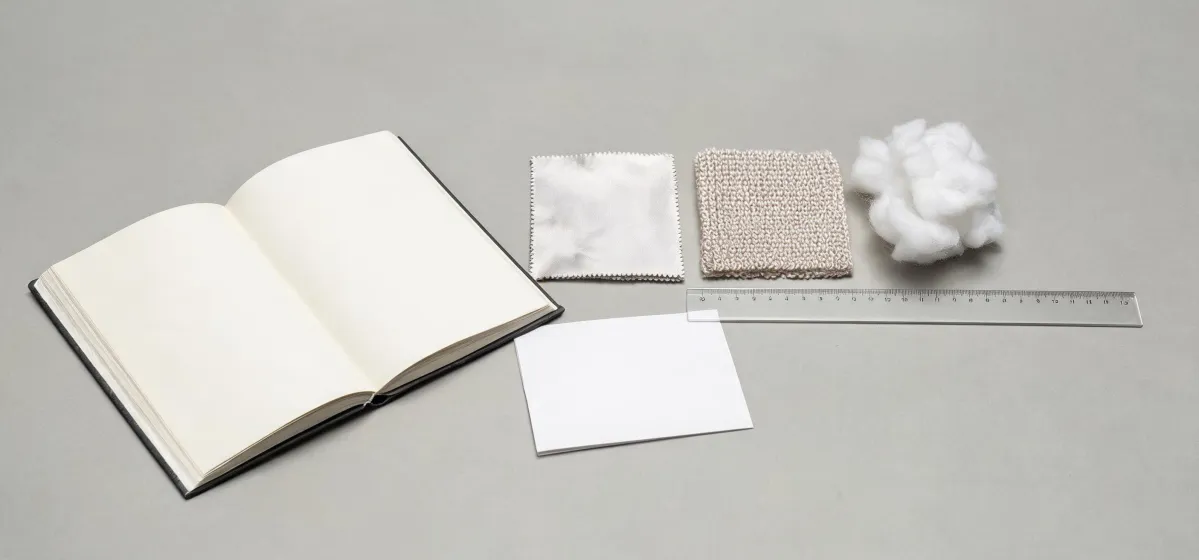
- Get a swatch from the production lot, not a photo. Touch it. Fold it. Wet it. Check if there is a coating on the back. The swatch can save you far more than it costs.
- Match the performance to the use case. Our swim parka spec required a high MVTR because the wearer is wet. A rain poncho, by contrast, might prioritize hydrostatic head. Generic adjectives like 'breathable' and 'water resistant' are dangerous.
If I could redo that decision, I would have paid for a same-day courier sample and waited five days for the test results. At the time I wanted to save time and impress the client with a fast quote. I did neither. I lost the time, the budget, and a little bit of my credibility with that brand owner.
The Honest Limitations of This Guide
This checklist works for what we do: mid-volume production, roughly 500 to 5,000 pieces per style, ordering from wholesale fabric distributors. If you're a startup making 60 custom swim parkas a year, your calculus is different. A local supplier with a physical swatch library is often better because you can see the actual hand feel and coating. This guide is not a substitute for that.
Also, I have mixed feelings about broker deals. On one hand, I've found legitimate wholesale suppliers that beat our regular distributor by 15 percent. On the other hand, the 15 percent savings disappears when you have to reorder, re-test, and re-freight. I now use brokers only for non-critical materials. Branded thermal textiles and breathable nylon fabrics get the full checklist.
This story is from 2018. Fabric prices, shipping costs, and testing standards have changed. If you're reading this in a different year, verify current costs and requalify every supplier. The underlying lesson hasn't changed: a brand name is a promise, a test report is proof, and a physical swatch is the closest thing to the truth.
There's something satisfying about watching a new assistant ask a supplier, 'What's the MVTR?' before I have to say it. That phrase is now the unofficial first page of our breathable fabric distributor buying guide. It cost us $4,800 to learn. Maybe this article saves you that trip.