-
When This Checklist Applies
-
Step 1: Lock the Spec Sheet Before You Talk Price
-
Step 2: Request Third-Party Lab Reports — Dated Within 12 Months
-
Step 3: Order a Production-Run Sample, Not a Lab Sample
-
Step 4: Verify Colorfastness Under Real Conditions
-
Step 5: Confirm Dimensional Stability After Washing
-
Step 6: Check the Hand Feel Against Your Reference Standard
-
Step 7: Document Everything Before You Confirm
-
Common Mistakes I Still See
When This Checklist Applies
If you're sourcing thermal insulation fabrics, performance swimwear fabric, ripstop nylon, or any functional textile for an OEM or private label program, this is the sequence I run before signing off on a bulk purchase order. It's built from about four years of reviewing fabric deliveries against spec sheets — and from the batches I wish I'd caught earlier.
Seven steps. Works whether you're ordering 500 meters for a pilot or 50,000 for a seasonal run. The first three are non-negotiable. The last four are where most buyers lose money.
Step 1: Lock the Spec Sheet Before You Talk Price
Every vendor will quote you a price. Fewer will commit to a spec sheet that defines exactly what they're delivering. Get that sheet first.
For thermal insulation like Thermolite, the spec sheet needs to state: fabric weight in GSM (grams per square meter), insulation value or clo rating if available, fiber composition (percentage breakdown, not just "polyester blend"), and the specific test method used for any thermal claims. Vague specs like "high warmth-to-weight ratio" are useless when the batch arrives and it's 20% thinner than the sample.
For swimwear fabric, the critical specs are: chlorine resistance rating, stretch and recovery percentages, colorfastness to chlorinated water (AATCC 162 or equivalent), and UPF rating if UV protection is claimed.
For ripstop, you need the denier, thread count, tear strength (warp and fill, measured per ASTM D1424), and whether the ripstop grid is woven or printed. Printed grids look the same in a photo. They perform completely differently after abrasion.
Here's what I learned the hard way: I once approved a thermal fabric order based on the vendor's marketing sheet. The actual delivered weight was 185 GSM against a promised 220 GSM. That's a 16% shortfall. Enough to fail our warmth retention tests. Enough to delay a launch by three weeks while they redid the batch.
So now: no spec sheet with measurable values, no order.
Step 2: Request Third-Party Lab Reports — Dated Within 12 Months
A vendor's internal test results are a starting point, not proof. Ask for reports from an accredited third-party lab — SGS, Intertek, Bureau Veritas, TÜV, or equivalent. And check the date. A passing thermal test from 2021 tells you nothing about the batch you're ordering in 2025.
For Thermolite insulation specifically, the relevant tests usually include thermal resistance (often measured per ISO 11092 or ASTM F1868) and, for the Ecomade line, recycled content verification. If a vendor claims a certain percentage of recycled feedstock, there should be a certification trail — GRS (Global Recycled Standard) or equivalent.
One thing I've started doing: I ask for the lab report number and verify it directly with the testing lab's online portal. Caught a discrepancy once — the report existed but covered a different fabric construction than the one we were ordering. Same vendor, same product family, different spec. Easy to miss if you're just glancing at the PDF.
Step 3: Order a Production-Run Sample, Not a Lab Sample
This is the step most buyers skip. They approve a lab sample — beautifully finished, hand-selected — and then the bulk order arrives with slightly different hand feel, slightly different color, slightly different drape.
Ask for a sample from an actual production run. Not a special batch made just for you. Not a leftover from a previous order. From the same line, same machines, same process that will make your order.
Test it yourself. Wash it. Stretch it. Abrade it. For swimwear, expose it to chlorinated water and check color migration. For thermal insulation, measure the actual GSM and compare it to the spec sheet. For ripstop, try to tear it — the grid should stop the tear, not just slow it down.
We started doing this in 2022 after a swimwear fabric batch failed chlorine testing at the garment stage. The lab sample had passed. The production sample we never requested would have failed. That mistake cost us roughly $14,000 in wasted fabric and a missed delivery window with a retail partner.
Step 4: Verify Colorfastness Under Real Conditions
Lab colorfastness tests use standardized conditions. Real life doesn't. If your swimwear fabric is going to sit in chlorinated pools, test it in chlorinated water. If your thermal fabric will be washed with detergent at 40°C, test it that way.
Ask the vendor for the specific test conditions they used. "Colorfastness: Grade 4-5" means nothing if you don't know whether that's against water, chlorinated water, seawater, or perspiration. Each is a different test.
For swimwear fabric especially, I've seen Grade 4 colorfastness against water drop to Grade 2-3 against chlorinated pool water. That's the difference between a product that survives a season and one that gets returned in a month.
Step 5: Confirm Dimensional Stability After Washing
Shrinkage and growth. Both matter.
Thermal insulation fabrics can shrink 3-5% after the first wash if the finishing process wasn't controlled. Ripstop nylon can grow — yes, grow — if the weaving tension was off. And swimwear fabric with high elastane content can lose recovery, which means it stretches out and stays stretched.
The test is straightforward: wash the production sample per the care instructions you plan to print on the final product. Measure before and after. If the vendor's spec says ±3% shrinkage and your test shows 6%, that's a red flag.
I don't have hard data on how common this is across the industry. My sense, from our own incoming QC over the past four years, is that dimensional stability issues show up in maybe 10-15% of first production samples. Usually fixable. But only if you catch it before the bulk run.
Step 6: Check the Hand Feel Against Your Reference Standard
This one sounds subjective. It is. That's why it matters.
Hand feel — the softness, stiffness, drape, surface texture — is what your customer actually experiences. And it's the easiest spec to drift without anyone noticing on paper.
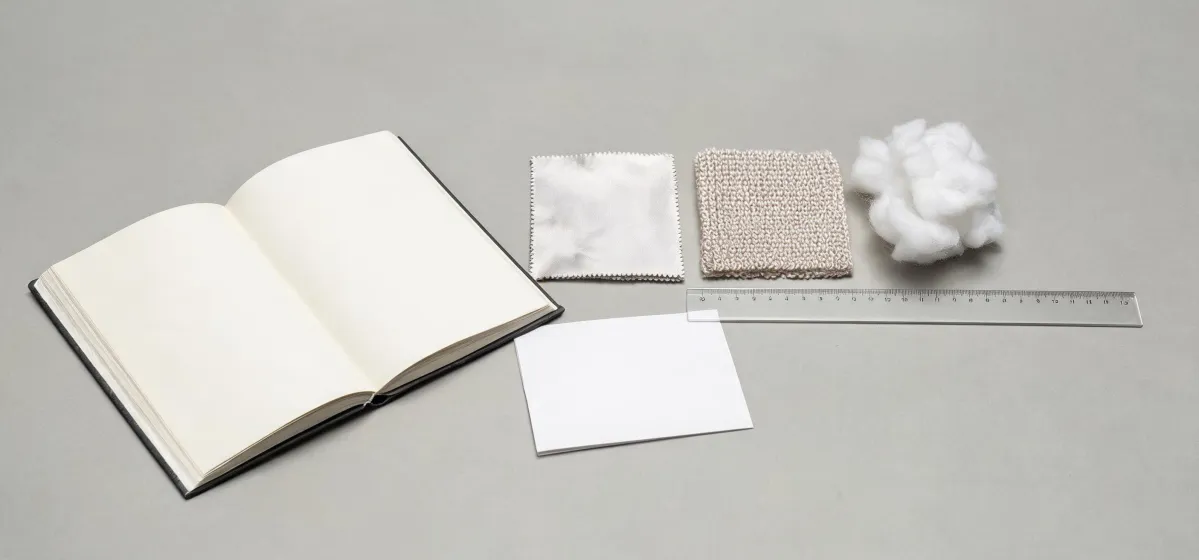
Keep a reference swatch. A physical piece of fabric that represents the approved hand feel. When the production sample arrives, compare it side by side. Not in a photo. Not in a video call. Physically. Under the same lighting.
We had a thermal fabric order where the GSM matched spec, the lab reports were clean, but the hand feel was noticeably stiffer than the reference swatch. Turned out the vendor had changed their softening agent to save cost. Legal according to the spec sheet. Completely wrong for our brand.
Now every purchase contract we sign includes a hand feel clause: "Fabric must match approved reference swatch in hand feel, as determined by buyer's physical evaluation." It's vague on purpose. It gives us the right to reject on feel alone.
Step 7: Document Everything Before You Confirm
Before the PO goes out, your file should contain:
- Signed spec sheet with measurable values
- Third-party lab reports (dated within 12 months)
- Production-run sample test results
- Reference swatch (sealed, dated, signed by both parties)
- Agreed tolerances for weight, width, shrinkage, and color
- Approved packaging and labeling requirements
- Clear rejection criteria and remediation process
We didn't have a formal approval checklist until 2023. Cost us when a vendor shipped a batch with the wrong width — 145 cm instead of the agreed 150 cm — and we had no documented tolerance to point to. They claimed 145 was "within industry standard." We had nothing on paper that said otherwise. We ended up splitting the rework cost.
Now every order gets a one-page verification sheet. Fifteen minutes to fill out. Saves weeks of arguing later.
Common Mistakes I Still See
Approving based on lab samples alone. Lab samples are made to impress. Production samples are made to ship.
Skipping the hand feel check because it feels unprofessional. It's not. It's the most professional thing you can do — it's what your end customer will judge.
Assuming a certification logo on a website means the fabric is certified. Certifications apply to specific facilities and specific batches. Ask for the certificate. Check the scope.
Not testing after washing. Most fabric failures — shrinkage, color loss, pilling, loss of stretch recovery — show up after the first or second wash. If you only test as-delivered, you're testing the least representative version of the fabric.
My experience here is based on mid-volume orders — mostly 5,000 to 80,000 meters per run — with Asian vendors supplying to North American and European brands. If you're working with very small artisan runs or ultra-luxury fabric houses, your tolerance thresholds might look different. Adjust accordingly.
Take it from someone who's rejected enough first deliveries: the fifteen minutes you spend on this checklist before the order goes out is the cheapest insurance you'll ever buy.