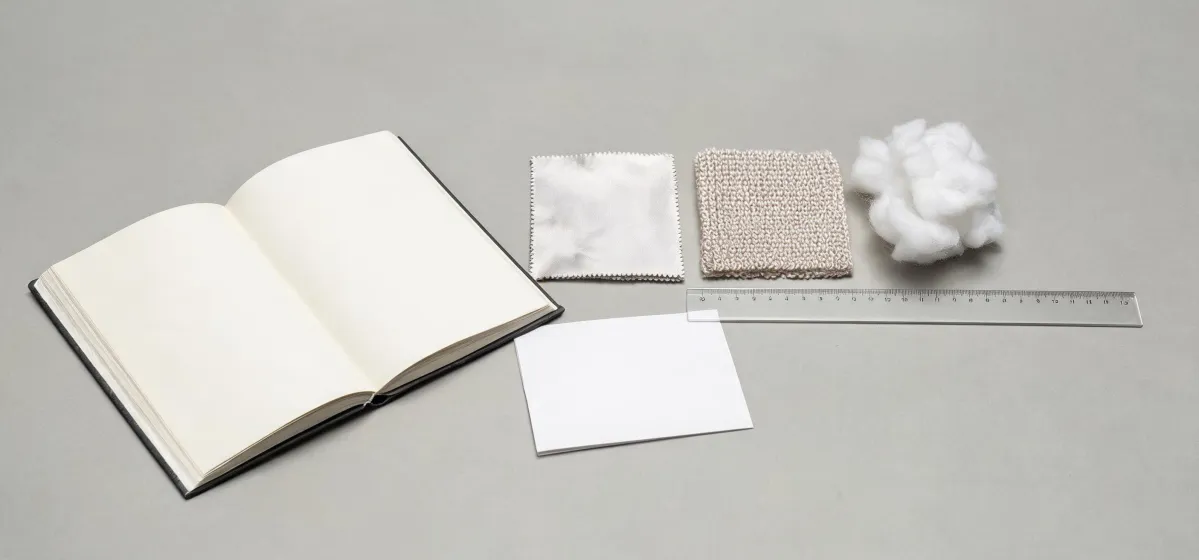
July 2022. I was standing in the warehouse holding a swatch of fabric that cost us roughly $9,000 to make. I say roughly because I'm still not sure of the exact number. Maybe $8,600. Maybe $9,400. Either way, it was exactly what the customer didn't ask for.
It didn't look wrong. If anything, it looked too good. Smooth nylon face, clean lamination, a soft thermal backer. On a hanger, it was a handsome piece of fabric. The problem was, the customer had specified something different, and I hadn't caught it until the sample reached their desk.
If you've ever sourced functional fabric, you know that moment when you realize an order is wrong. It's like watching a car door close on your thumb from far away. I'm the account manager handling OEM and private label fabric orders at Thermolite. I've been in this seat for seven years. I've personally made and documented enough bad calls to fill a small drawer of shame—roughly $47,000 in wasted budget, if I'm being honest. This particular mess is the reason I started keeping a checklist.
How It Started
Thermolite is a functional fabric manufacturer. Most people know us as a nylon fabric manufacturer, which is fair—nylon is the base for a large part of our performance line. A big share of our inbound is from buyers looking for waterproof fabric wholesale. The ironic part is that the feature that usually seals the deal is not the nylon or the waterproof membrane. It's the Thermolite insulation inside the fabric.
In late 2021, a mid-size outdoor brand contacted us. They wanted a winter training jacket: wind-resistant, breathable, with a soft hand feel. They asked if we could supply 'Thermolite fabric' for it. In their heads, that meant a custom construction: 70D nylon outer, a waterproof membrane, Thermolite insulation, and a brushed knit backer. In my head, that sounded a lot like our existing 3-layer Thermolite softshell. And I think that's where the trouble started.
It wasn't arrogance. I honestly didn't know they wanted something different. They had mentioned 'custom' in one email, but I read it as a casual word, not a technical requirement. They had drawn their own spec sheet, but no one had sent it over until after we started sampling.
Functional Fabric OEM vs Private Label: The Question I Forgot to Ask
If you work in apparel sourcing, you probably know the difference between OEM and private label. But in fabric manufacturing, the words get slippery. Let me break it down the way I wish someone had for me:
- Private label fabric means you're taking an existing product from the supplier. You can brand it as yours, choose a color, maybe adjust a finish. It's fast, repeatable, and usually cheaper.
- OEM fabric means you're commissioning a construction to your spec. That includes the base yarn, the membrane, the insulation weight, the lamination process, and sometimes the stitch thread. It's more work and more upfront communication.
Neither is better. They're just different routes. The customer thought 'Thermolite fabric' was OEM. I thought it was private label. Both of us were polite, responsive, and completely misaligned.
What Went Wrong
We cut 4,000 meters of fabric based on our standard recipe. The face was 70D nylon, but not the textured 70D they wanted. The membrane was water-resistant, but it wasn't anything close to a 10,000 mm hydrostatic head. The Thermolite insulation was 120 gsm, but they had asked for 150 gsm in a drawing I hadn't properly reviewed.
When the sample arrived at their office, they didn't get angry. They sent a very polite email with a bullet-point list of differences. It was worse than anger. Because every point was correct.
The wasted material came to around $3,500. The lamination and testing cost another $2,000. Shipping and the back-and-forth added more. When I look at the whole debacle—including the hours I spent explaining what happened to my own manager—the total sits somewhere between $8,000 and $10,000. I still kick myself. The fix would have been a five-minute phone call before we pressed start.
Here's what surprised me. It wasn't a quality failure. It wasn't a bad supplier. It wasn't a sloppy customer. It was a communication failure disguised as a technical problem. We had all the technical capability in the world and still managed to make the wrong thing. That's the sneaky part of functional fabric OEM vs private label decisions. The words feel clear until they aren't.
I don't have hard data on how often this happens across the industry. Based on our own order history, I'd guess it affects maybe 8 to 12 percent of first-time custom development inquiries. I've never tracked it as carefully as I should, so take that with a grain of salt. But I know the cost of it firsthand, and it's not small.
What I Changed After That Order
The biggest change was simple. I added a digital pre-sourcing checklist to every new fashion and outdoor order. It's a basic form with four questions:
- Are you buying an existing fabric from our collection, or do you need a developed-to-spec fabric?
- What performance numbers matter? Water column, breathability, or both?
- What insulation weight do you need in gsm?
- Can you share the final spec sheet before we cut anything?
That meant moving from long email chains to a standard form. It doesn't sound revolutionary, but it cut our quote-to-sample turnaround from an average of 52 days down to about 30. Some projects go even faster. And more importantly, it stopped the kind of silent assumption that killed that 4,000-meter run.
I should add that we don't force this form on every buyer. If someone just wants a good thermal shell and doesn't have a spec sheet, our stock Thermolite softshell is a no-brainer. Private label isn't a dirty word. The issue is when a buyer thinks they're getting one thing and a supplier thinks they're delivering another.
What You Can Learn From My Mistake
If you're sourcing nylon fabric or ordering waterproof fabric wholesale, the question matters no matter which side of the table you're on. Ask about OEM vs private label before you talk about price and lead times. If your supplier doesn't ask you for a spec sheet, that's a red flag. And if you have a spec sheet, send it early.
The order eventually worked out. We rebuilt the fabric to the customer's spec, they got the Thermolite insulation layer they needed, and we kept them as a client. But we started the relationship with a $9,000 lesson that I'd rather not repeat.
Bottom line: the cheapest part of the process is asking the obvious question. The expensive part is assuming you already know the answer. Take it from someone who learned the hard way.