Something Felt Off
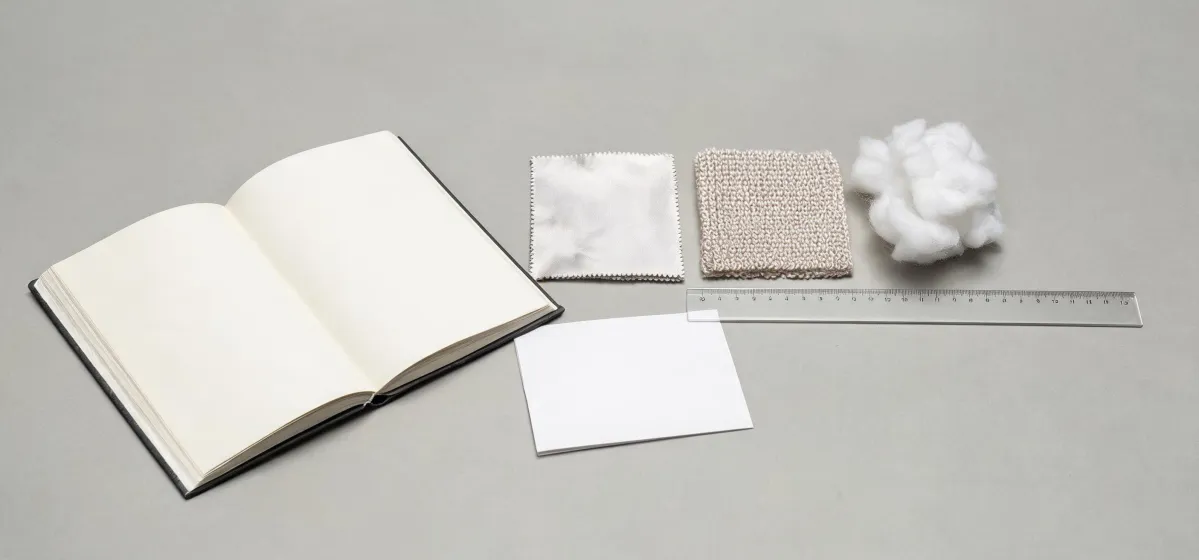
I knew something was wrong before I even touched the swatch. The color was right, the hand feel was close, but the weight was off. I weighed it with ASTM D3776 (astm.org), the standard method for mass per unit area of fabric. The result: 138 grams per square meter. For a 300D oxford polyester with PU coating, I'd expect something closer to 180. The sample had the right yarn count on paper, but paper doesn't tell the whole story.
Let me back up a little. I'm the quality and compliance manager at a performance fabric supplier that produces THERMOLITE® insulated softshell and outerwear fabrics. I review roughly 200+ fabric deliveries a year. In 2025, I've rejected 12% of first articles because they missed a critical spec. So when a customer says “just standard 300D oxford,” I don't hear “just.” I hear “please ask ten more questions.”
The Spec That Wasn't
This particular story starts six weeks earlier. A mid-sized outdoor brand—we'll call them Northline—was developing a new insulated softshell jacket. They wanted THERMOLITE® insulation. That part was clear. The outer shell was another story. Their initial spec sheet said: “300D oxford polyester, clear PU coating, DWR. Standard.”
Northline wasn't a commodity buyer. They planned to sell the jacket under their own label, with their own hang tag and their own social media push. That's the kind of OEM/private label relationship we see every day. It works well when the spec is clear, and it falls apart when someone treats “standard” as a spec.
I'm comfortable with “standard” in a lot of contexts. Not here.
To understand why, you need to know what “300D oxford” does not tell you. It doesn't tell you the yarn type—flat filament, partial dull, full dull. It doesn't tell you the loom state or the finishing route. It doesn't tell you the coating thickness, the water column pressure, the breathability target, the abrasion resistance, or the shrinkage limit. “300D” is the beginning of a conversation, not the end.
This matters even more when you're using THERMOLITE insulation. A Thermolite fabric system isn't just a layer of insulation; it's a combination of the face, the insulation, and the lining. The insulation is designed to trap still air and keep a person warm, but it can't do that job if the shell lets wind strip the warmth away or rain wet out the whole system. The outer fabric and the insulation have to work as a system. A vague shell spec puts the entire system at risk.
That's also a lesson I learned the hard way. In my first year on this job, I made the classic spec error: I approved a “200D nylon ripstop fabric OEM” order based on a handshake and a verbal description. The fabric was meant for a packable jacket. When the first production batch arrived, it was 58 g/m² instead of 65 g/m². The difference didn't show up when the pieces were cut. It showed up in the wind tunnel, when the jacket puffed up like a balloon. We rejected the batch, the vendor redid it at their own cost, and we lost three weeks. That mistake has never left me.
The Test That Changed Everything
Now back to Northline. They had a production slot locked in, and their sales team wanted a final fabric decision within 48 hours. Normally, I'd want a full test cycle: hydrostatic head, moisture vapor transmission, abrasion, shrinkage, field trial. We didn't have time. So I made a time-pressure decision. I'd run one test—the hydrostatic head test for the PU coating—and decide from there. If the coating could hold 5,000 mm water column, we could talk. The sample failed at 800 mm. For a softshell that might see a rainstorm, 800 mm isn't even a drizzle.
We use ISO 811 (iso.org) for hydrostatic pressure testing. It's a standard method, and it gives a number you can compare. I called Northline with that number. The silence on the other end of the line told me everything. They admitted they'd already ordered 8,000 linear yards of that very fabric from a bargain ripstop fabric OEM in Asia. The swatch I'd tested was just a pre-production hand sample. They'd been seduced by a per-yard price 40% below the average I see in my own oxford fabric wholesale cost guide.
The product manager said, “But my supplier called it standard.” I heard that exact sentence twice in 2025 before this project. “Standard” is not a protected term. It's not a quality mark. It means whatever the seller wants it to mean.
I told them to hold off on cutting until we could inspect the actual rolls. The inspection found the same problem—only worse. The coating had picked up crease marks in transit, and the hydrostatic head was 600 mm. We also ran a quick 90-degree peel test and watched the coating separate cleanly from the base fabric. That's not a coating you can rely on.
How We Fixed It
Northline hadn't cut yet, so we had a window. We wrote a detailed spec sheet for the outer shell and had a small roll of a properly specified 300D oxford coated with TPU—not just PU—sent over. The new fabric passed the 5,000 mm requirement. Combined with the THERMOLITE® insulation, the jacket finally had a shell that would keep warmth in and water out. The line shipped two weeks late, but it shipped. Northline sold out their pre-order and came back to us the next season. We also gave Northline a simple hand-held tester so they could verify future lots at their own factory. It wasn't an expensive lab-grade instrument, but it was enough to catch gross variations before cutting.
A cheap shell can ruin the most expensive insulation. This is where the industry has changed. A decade ago, a good mill could bridge the gap between a vague request and a finished fabric, because the contact person had decades of experience. In 2025, performance fabric wholesale is done through search engines, online sourcing platforms, and procurement teams juggling dozens of categories. The buyer is the new quality gate. The fundamentals haven't changed—yarn, weave, coating, testing—but the execution has transformed. What was “good enough” in 2020 may not be good enough in 2025.
What I'd Tell Every OEM Buyer
If you're buying performance fabric wholesale—especially for a Thermolite fabric system—here are three things I wish more buyers understood.
- A D-number is not a full specification. For ripstop fabric OEM orders, include ripstop grid spacing, reinforcement yarn, and tear strength. For oxford fabric, include yarn luster, weave density, and finishing route.
- The cheapest per-yard price is not the lowest total cost. When you compare oxford fabric wholesale cost guide numbers, include the cost of failures, air freight, and delayed launches. A cheap outer shell can easily double the cost of a jacket if it fails before the insulation does.
- Test the finished combination, not just the face fabric. THERMOLITE® insulation can manage warmth, but it can't fix a shell that leaks or a lining that abrades. The system has to work together.
Northline's story had a happy ending, but that was luck plus a lot of fast work. The next one might not be. If you're buying performance fabric wholesale, send me your spec sheet. I can tell you in five minutes whether it's a real specification or just a hope. And I'd rather tell you now, before you order 8,000 yards.